
Finding the right person to suit your business’s needs may also take some time and effort. If you are seeking to attract investors, for example, consider using generally accepted accounting principles (GAAP), which provide a common way to standardize financial reporting using the accrual method. These formulas will help you a great deal in your accounting process, but some things get better with expert support. With AccountsBalance, you get a dedicated bookkeeping team working for you to make your books accurate and keep you financially healthy. Net income is the profit remaining after all expenses, including taxes and operating costs, have been deducted from revenue. Think of the general ledger as your business’s financial diary—it keeps track of every transaction in one place.
Bookkeeping Basics 101: 9 Bookkeeping Basics for Beginners

Equity is the ownership or claim to your business, calculated by subtracting your liability total from your asset total. Accounting looks at financial liabilities—sums of money your business owes. This is separate from legal liabilities, which consist of legal responsibilities and obligations. For instance, a warranty repair would be a financial liability, while a failed product that caused damage or injury to your customer would be a legal liability. Liabilities consist of any obligations your business owes to an outside party. This can include money owed to employees, suppliers, banks, and government entities.

Prepare financial reports
This connection between the income statement and balance sheet is important. For one, it keeps the balance sheet and the accounting equation in balance. Secondly, it demonstrates that revenues will cause the stockholders’ equity to increase and expenses will cause stockholders’ equity to decrease. As a result, the revenue and expense accounts will start the new year with zero balances—allowing the company “to keep score” for the new year. For example, if a balance sheet is dated December 31, the amounts on the balance sheet reflect the account balances after all transactions up to midnight on December 31 have been recorded.
Bookkeeping 101: Why Is Bookkeeping Important?
- Whether you’re an established or new business owner, here are seven bookkeeping processes to follow.
- Your business must be recognized as an entity for operating purposes and is required by law in most countries.
- He asks his banker to recommend a professional accountant who is also skilled in explaining accounting to someone without an accounting background.
- Just solid support, clear reports, and expert insights—so you can focus on growing your business.
- The account Common Stock will be increased when the corporation issues shares of its common stock in exchange for cash (or some other asset).
- Liabilities also include amounts received in advance for a future sale or for a future service to be performed.
A clear assets = liabilities + equity picture of your income within a specific quarter makes it easy to figure out how much tax to pay for that three-month period. As you balance Accounts Receivable against Accounts Payable, the result is your net income. Divide this amount by net sales amount to obtain your profit margin.
Adjust Entries at the End of Each Accounting Period
This account is a crucial component when it comes to calculating the cost of goods sold (COGS) — indispensable if you run an online or brick-and-mortar store. You just subtract the amount you paid to buy the raw material from the sales, and the remainder is your profit. In order to run a small to medium-sized business, you have to learn some bookkeeping basics. You don’t need to commit to an accounting degree to master the techniques you’ll need. By maintaining clear separation, you’ll simplify your bookkeeping and have a more accurate picture of your business’s financial health.
When should I consider outsourcing bookkeeping to a professional?

The customer tells Joe to submit an invoice for the $250, and they will pay it within seven days. Then on the next line, the account to be credited is indented and the amount appears further to the right than the debit amount in the line above. To help Joe understand how this works, Marilyn illustrates the double-entry system with some sample transactions that Joe will likely encounter. Accounting software and apps are used by 51% of small businesses in the US according to QuickBooks Small Business Index Report in 2025. When your business has a high debt-to-equity ratio, it indicates you are relying heavily on debt to fund operations.
Similarly, the amount not yet allocated is not an indication of its current market value. Bookkeeping is the process of tracking income and expenses in your business. It lets you know how you’re doing with cash flow and how your business is doing overall.

A bookkeeper’s job is to record your company’s day-to-day financial transactions accurately, consistently and on a timely basis. This entry in financial records increases revenue, liabilities, or equity while simultaneously decreasing assets or expenses. The balance sheet is a form of financial statement that shows your business’s current assets, liabilities, and owner’s equity. It lists what your company owns (assets), what it owes (liabilities), and the owner’s or shareholders’ stake in the business. A key bookkeeping duty is organising and storing financial records. This includes receipts, bank statements, tax returns, and invoices.
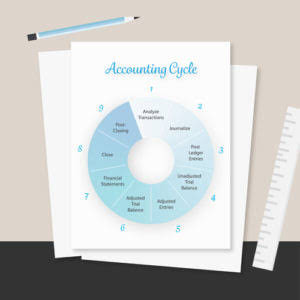
- QuickBooks makes it easy to manage your books, track expenses, and keep everything organized in one place—so you’re always ready for tax time and beyond.
- Hence, net realizable value is sometimes referred to as cash realizable value.
- As a small-business owner, solid bookkeeping is the best way to ensure that you get the most out of your return.
- These days, you’ve got three options when it comes to bookkeeping tools.
- Both the single-entry and double-entry methods can work in tandem with cash or accrual bookkeeping.
Using spreadsheet software is the cheapest accounting option (especially if you use a completely free software, like Google Sheets). With AccountsBalance, you get dedicated experts who can understand the complexities of businesses, from digital payment processors to multi-channel sales. We give you clear financial reports by the 15th of every month, helping you https://www.bookstime.com/ make better decisions.
Bookkeepers record a business’s financial transactions, manage the accounts, and maintain the established accounting systems. Accountants analyze bookkeeping 101 the financial records and provide advice on improving financial processes to meet their client’s financial goals. By now you should have a pretty good idea of the ins and outs of small-business bookkeeping.